

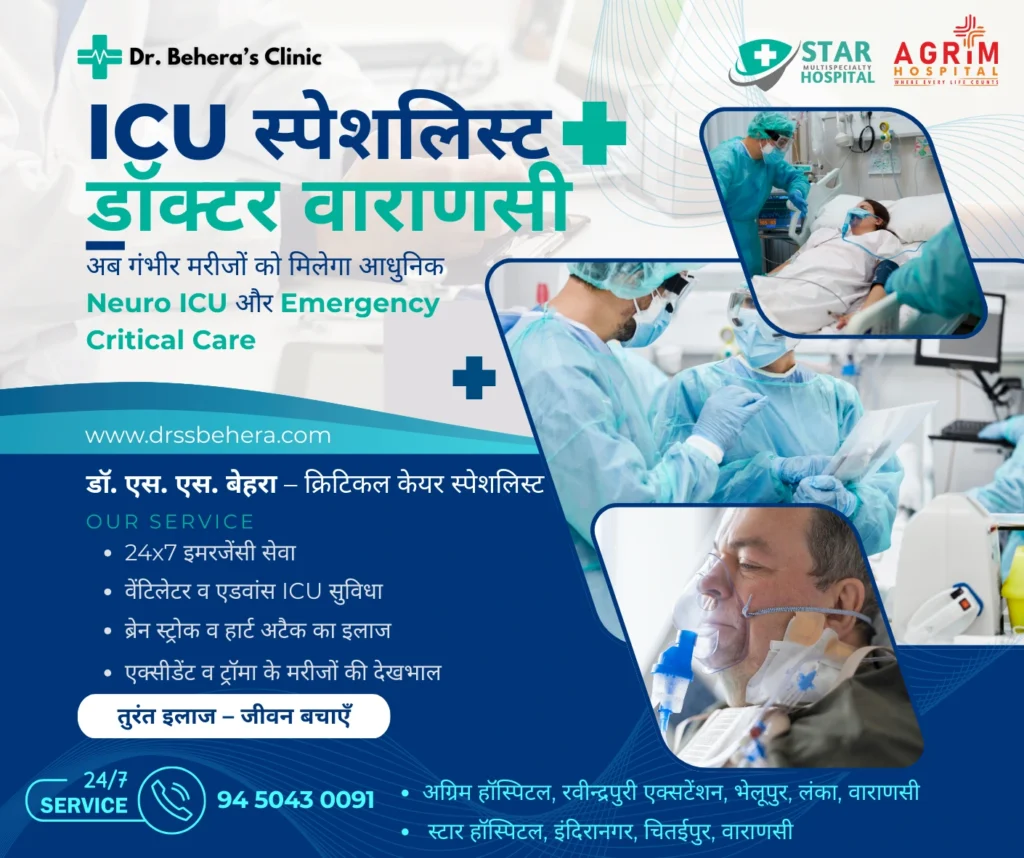
When a health emergency strikes, the ICU specialist doctor in Varanasi you choose can make a life-saving difference. From brain stroke and head injury to heart attack, respiratory failure, sepsis, and multi-organ dysfunction, critically ill patients need rapid stabilization, expert monitoring, and advanced life support. This is where a dedicated Neuro ICU and an experienced emergency critical care doctor become essential.
In Varanasi, families often arrive first at a private hospital accident and emergency unit after an injury, fall, or sudden collapse. The next decisive step is early ICU admission, continuous observation, ventilator management, and targeted therapy. A skilled ICU specialist coordinates this entire path—streamlining diagnostics, optimizing medications, and leading a multidisciplinary team across neurology, cardiology, pulmonology, nephrology, and trauma surgery.
An effective intensive care physician combines expertise with systems thinking. They:
Stabilize quickly with airway, breathing, and circulation (ABC) protocols.
Run time-critical pathways for stroke, sepsis, myocardial infarction, and poly-trauma.
Manage advanced devices including ventilators, invasive monitors, infusion pumps, dialysis/CRRT, and non-invasive ventilation.
Coordinate Neuro ICU care for stroke, brain hemorrhage, seizures, meningitis/encephalitis, and coma.
Communicate clearly with families about prognosis, risks, and step-wise plans.
Choosing an ICU specialist doctor in Varanasi with experience in both general critical care and Neuro ICU improves outcomes and shortens recovery time.
A Neuro ICU is designed for conditions where minutes matter:
Brain stroke/brain hemorrhage: Rapid imaging, blood pressure control, thrombolysis or neuro-interventions, and strict neuro-monitoring.
Seizures/status epilepticus: Immediate anticonvulsants, airway protection, metabolic correction, and continuous EEG when indicated.
Head injury/trauma: Intracranial pressure management, ventilator strategies, and coordinated neurosurgical care.
Meningitis/encephalitis: Early antibiotics/antivirals, fluid/electrolyte balance, and vigilant neurological assessment.
A seasoned neuro ICU doctor in Varanasi ensures protocol-driven, evidence-based care that reduces complications such as aspiration pneumonia, pressure injuries, and delirium.
In road traffic accidents, falls, or workplace injuries, a best accident doctor Varanasi approach includes:
Pre-ICU stabilization: Airway protection, bleeding control, IV access, and pain management.
Fast diagnostics: CT/MRI, ultrasound (FAST), and critical bloodwork.
ICU admission criteria: Hemodynamic instability, altered consciousness, respiratory distress, or multi-system trauma.
Definitive ICU care: Ventilator support, fluid resuscitation, vasopressors, antibiotics, and organ-support therapies.
Rehabilitation planning: Early mobilization, nutrition, physio, and discharge protocols.
This seamless private hospital accident and emergency to ICU pathway is led by the emergency critical care doctor, ensuring nothing is missed during the “golden hour”.
Cardiac: Heart attack, rhythm disturbances, acute heart failure
Neurological: Stroke, brain hemorrhage, seizures, coma, infections of the brain and spinal cord
Respiratory: Severe pneumonia, ARDS, COPD/asthma exacerbations, ventilator dependence
Renal & Hepatic: Acute kidney injury, dialysis/CRRT, decompensated liver disease
Infections: Sepsis/septic shock, meningitis/encephalitis
Trauma & Post-Op: Poly-trauma, head injury, complex post-surgical monitoring
These standardized checklists and bundles are proven to lower ICU complications and length of stay.
When searching for an ICU specialist doctor in Varanasi, consider:
The right ICU specialist with Neuro ICU expertise can dramatically change outcomes in stroke, trauma, and medical emergencies. If you or a loved one needs urgent intensive care, prioritize hospitals with dedicated private hospital accident and emergency services, 24×7 ICU coverage, and an experienced emergency critical care doctor leading the team.
Dr. Behera’s Clinic, Indiranagar, Chitaipur, Varanasi Website: www.drssbehera.com
 Dr. Behera’s Clinic Star Multispeciality Hospital, Varanasi Agrim Hospital, Varanasi www.drssbehera.com
Look for an ICU specialist doctor in Varanasi with strong Neuro ICU experience—someone who manages stroke, brain hemorrhage, seizures, and head injuries using protocol-driven care.
Acute stroke, brain hemorrhage, severe head injury, prolonged seizures, and meningitis/encephalitis benefit from Neuro ICU monitoring and targeted therapies.
Immediately. The earlier a patient reaches a stroke-ready ICU, the better the chances for clot-busting therapy, reduced brain damage, and improved recovery.
Yes. These conditions are medical emergencies and require urgent hospitalization.
In respiratory failure, severe pneumonia/ARDS, decreased consciousness, or before major procedures—managed by trained ICU teams to optimize oxygenation and protect the lungs.
Risk can be minimized with strict infection control, hand hygiene, antibiotic stewardship, and device-care bundles for lines, catheters, and ventilators.
Diagnosis, current stability, key risks, next 24-hour goals, expected investigations, and discharge/rehab planning.
Seek a trauma-ready hospital with an experienced accident doctor Varanasi team and integrated ICU support for rapid stabilization and definitive care.

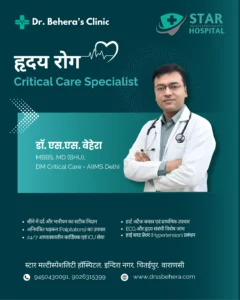
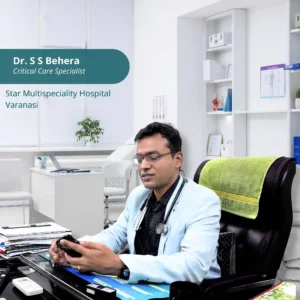

Advanced Critical Care & Multispecialty Services in Varanasi
📍 Clinic Address:
N-6/2, B-120, Indra Nagar, Chitaipur, Varanasi, Uttar Pradesh
 Contact:
(+91) 94 5043 0091 | (+91) 7270032109 Email: drshailaja85@yahoo.com
All rights reserved by © Dr. Beher’s Clinic – Designed by Nexus DigiTech
No WhatsApp Number Found!
WhatsApp us